THE BEE POPULATION – HOW CANNABIS MAY BE THEIR SAVIOR
Referred to as ‘colony collapse disorder’, billions of Honey bees across the world are leaving their hives, never to return. In some regions, up to 90% of bees have disappeared!
– National Geographic
Honey bees are the lifeblood of the ecosystem. According to Matthew Mulica, with the Honey Bee Health Coalition, “Honeybees are essential for the pollination of flowers, fruits and vegetables, and support about $20 billion worth of crop production in the U.S. annually.” They are one of the most important agriculture commodities in America because they naturally encourage crops to grow and produce fruit through the process of pollination.
Without bees, as the country is now seeing the drastic withdrawal effects, there are less and less crop production across the entire nation. Farmers are even paid to bring their hives in off-season to California to pollinate the thousands of almond orchards. California does not have a large enough honey bee presence to pollinate all of the almond trees, so they are forced to rely on bees from the Midwest and east coast totaling to 60% of all managed bee colonies. Then, those colonies travel to Florida to pollinate citrus, and around to southeast to ensure the production of blueberries, cherries, peaches, and other fruits.
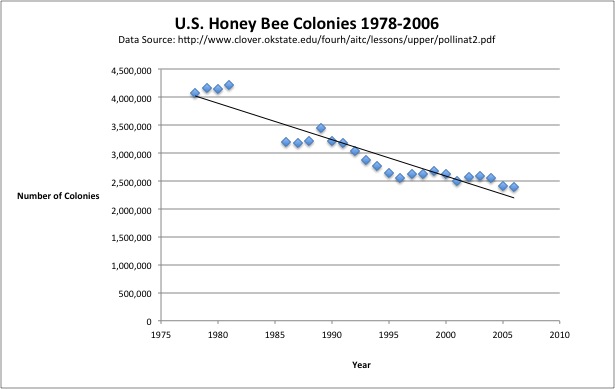
These exponential losses in bee colonies are occurring at an unsustainably high rate. The largest contributor to the decline of bee health is the varroa mite, a parasite that invades the hives and spread diseases. This parasite is a relatively new threat to bee existence, though. Another new and dangerous threat to bees are humans. “All of the reasons for the loss of the honey bee population derive from human error,” said Scott McArt, assistant professor of pollinator health at Cornell University. He stated that each of the dangerous hazards for bees have been man-made.
Firstly, there are poor management practices, like moving bees from extreme temperatures in short amounts of time. Secondly, pesticides are dramatically effecting the population negatively. Thirdly, expansion of territory such as new suburbs or commercial buildings has stripped the bees from their homes. There are less areas to live, harsher clients to fight, and deadly food to eat. All of these issues are on the fault of mankind.
Yet, hope is not lost.
What if humans could reverse the terrible acts they have committed against the bees, the very ones they need to eat and survive? Thankfully, there is a solution. Cannabis seems to be the cure for a plethora of ailments, but bees could be the most radically changed through the growth and harvesting of this magic plant. Researchers from New York State University discovered large numbers of 16 different species of bees thriving among cannabis crop. Marijuana crops do not require pesticides because pests are not attracted to them.
This allows the crop to grow naturally and leave the bees unaffected by harmful chemicals. Additionally, hemp has the potential to provide critical nutritional resources to the bee community when there is floral scarcity. This allows bees to remain active, continue to build the hive, pollinate more crops, and make the ecosystem thrive with life and productivity. Studies are currently being conducted, but cannabis has proven to be a great asset for reversing the bee’s descent towards the endangered list.
 Nature + Nutrition